
Fine-ish, Thanks for Asking: Stephanie Steggehuis on Founding ISHLY
Oct 01, 2026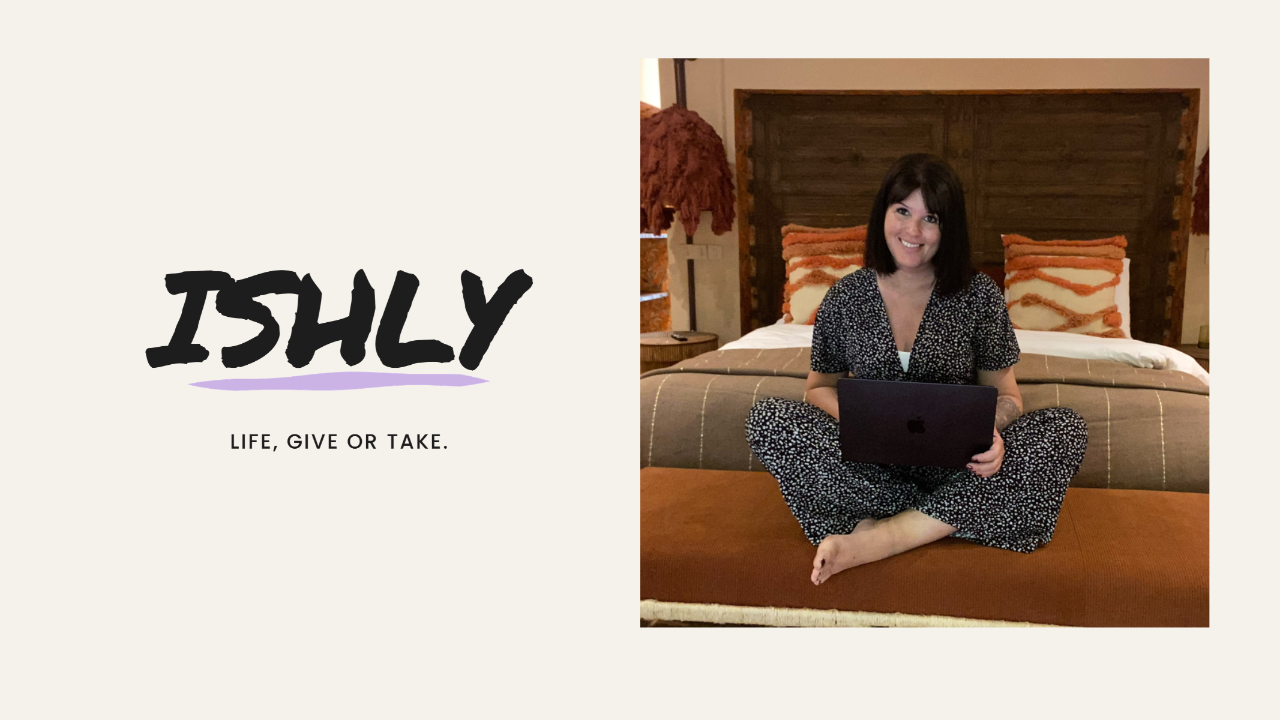
She spent years making other people's businesses look good. Now Stephanie Steggehuis is building a brand for everyone who has ever been told "but you look fine". It's called ISHLY, and it is not here to cheer you up.
Ask most people with an invisible chronic illness how they are, and you'll get the same answer. Fine. Ask Stephanie Steggehuis, and you'll get a more honest one: fine-ish.
That small suffix is the whole idea behind ISHLY, the brand she launched in September 2026 from her home in the south of Spain. It's built for the millions of people whose illness doesn't show. They have fatigue that sleep doesn't fix, pain nobody can see, brain fog, dizziness, and a body that doesn't always cooperate. They also have good days, plans they want to go to, and a sense of humour that the wellness industry mostly forgot about.
ISHLY is for them. It's funny, it's honest, and it refuses to pretend that either the bad days or the good days aren't real.
From eBay to the south of Spain
Stephanie is Dutch, 36, and has lived in Spain since 2015. She spent ten years in Madrid before swapping the capital for Murcia. She lives there with three dogs: Mickey, Goofy and Baloe. She works in Dutch, English and Spanish, sometimes in the same hour.
Her background is marketing. She started in the corporate world, including a stint at eBay, where she learned how big brands talk to people. In 2020 she went out on her own with stephanieHQ, helping course creators launch online. She builds websites, writes the copy and plans the launches, and she's an Official Kajabi Expert. She's also a certified NLP coach.
On paper, a steady career. Behind it, a body that had other plans.
"It's probably stress"
Stephanie has been a regular at hospitals since she was four. Chronic ear infections followed her through most of her life, along with more than fifty operations. At 20 she was diagnosed with PCOS.
Then, in 2020, came a car accident. The car was written off. She walked away without a scratch. Afterwards, though, her body started getting weirder. She felt dizzy often, for no reason she could point at, and nothing dramatic enough to take to a doctor.
In October 2021 it stopped being subtle. She was 31, and she woke up feeling drunk. Weeks later, she had surgery for precancerous cervical cells, while she was still being told nothing much was wrong.
Over the next two years, her vision and balance got stranger every day. Supermarkets, busy streets and even hallways became things to plan for. By 2023, the drunk feeling was constant. Every day, all day.
She went from doctor to doctor and heard the same sentence every time: it's probably stress.
"I knew it wasn't."
In 2024, at 34, someone finally ran the right tests. The diagnosis was bilateral vestibular hypofunction and oscillopsia. In plain words, the balance organs in both her ears underperform, so her brain borrows from her eyes and feet all day without a break. Her eyes also don't steady the world when she moves, so it jolts with every step. It's not vertigo and it doesn't spin. It's not anxiety either. It's constant, and there is no cure, only rehab and adapting.
"Relief and grief arrived in the same appointment."
The diagnosis didn't come with instructions. She had spent two and a half years fighting to be believed. "I had never once thought about what came after being believed," she says.
None of this makes her anti-doctor. The doctor who finally ran the right tests changed her life. Her point is a different one: people deserve to be believed sooner.
What changed things was a shift in focus. "Once I stopped organising my life around the illness and started organising it around my life, it became something I could handle." That sentence became the whole idea behind ISHLY.
These days she also does reformer pilates, which she started in 2026. It doesn't cure anything. It does make her stronger and steadier, which gives her hard-working brain more to work with.
The problem with sounding good
After the diagnosis, Stephanie looked for things that would help. She found two kinds. There was very serious content that read like a hospital leaflet, and very upbeat content that suggested a smoothie and a positive mindset.
Neither sounded like her life. Her life was more like this: a free afternoon and nothing in the tank. A friend saying "but you look so well". A doctor saying it's probably stress. And yes, also a great night out that she fully committed to, on purpose, knowing she'd pay for it later.
So she built the thing she was missing.
What ISHLY makes
The heart of ISHLY is The Energy Journal, a 12-week undated journal now sold on Amazon worldwide. It started from one simple thought: time was never the thing you were short of. Energy was.
"Most journals are designed to help you do more. The Energy Journal is designed to help you live better with the energy you actually have."
There are no streaks, no dates and no forced gratitude. Instead, each morning asks what you have, what has to happen, and what you're allowing yourself to drop. Each evening asks what cost more than it was worth, and the one thing that didn't suck. There's even a page of replies for when someone tells you that you don't look sick.
Around the journal, ISHLY has grown fast. FINE-ISH is a free online magazine that readers call relatable, funny and genuinely needed. It already has seasonal editions: Halloween-ish and, for Christmas, Merry-Ish. Plan-ISH is a free web app for planning the things you want to go to, with a symptom tracker and a page of comebacks for a day out. She built it in October 2026 for the Base44 Challenge.
ISHLY also works with hotels, event venues and workplaces, helping them become accessible for people with invisible conditions. Think sensory needs, hearing, balance, fatigue and pain. Most of it, she says, needs no renovation, just better habits and better information.
Funny, on purpose
What sets ISHLY apart is the tone. On Instagram, at @ishly.life, it's dark, sarcastic and occasionally sweary. When someone suggests you try yoga, ISHLY doesn't explain politely why that won't cure you. It takes the advice literally and follows it off a cliff.
The humour comes from moments people recognise. Being asked if you've tried sleeping more. The look you get when you're tired again. The exhausting job of proving you're ill to people who've decided you look fine.
Under the jokes, the work is careful. Facts are checked. ISHLY never sells cures, supplements or miracle fixes. Words like "just a migraine" are banned, because having it at all is already a lot.
And crucially, ISHLY doesn't only talk about the hard days. Most chronic illness content is about cancelling, shrinking and lying down. ISHLY also talks about Halloween you plan well enough to enjoy, and a night out you go all in on. The hard days are real. So are the good ones.
What's next: GOOD-ISH
Stephanie's biggest plan is a podcast. GOOD-ISH launches in early 2027 with five short solo episodes, each 10 to 15 minutes, so they're easy to listen to on a low-energy day. After that, she'll alternate with conversations with experts: doctors, specialists and therapists who apply their field to life with an invisible chronic illness.
It's about life with the illness, not the illness itself. Funny, fact-checked, and in English.
Her goal for ISHLY is big: a brand that people with invisible chronic illness recognise straight away, and that the people around them finally learn from. Until then, she signs off every email the same way.
Life, give or take.
ISHLY · ishly.life · Instagram @ishly.life · [email protected]
The Energy Journal is available in paperback and hardcover on Amazon. The FINE-ISH magazine is free at ishly.life/magazine.